Can we get married in Provence if we are not French residents?
Yes, and most of our couples are not. A legally binding civil ceremony in France requires one of you to have lived in the commune for at least thirty days before the wedding, which is why the large majority of international couples marry legally at home and hold their ceremony here as a symbolic one. That symbolic ceremony is the one everybody remembers: you choose the words, the officiant, the readings and the setting, with none of the administrative constraints. Nothing about the celebration itself changes, and no French paperwork is required for it.
Is the estate exclusively ours for the wedding?
Yes. Each of the four estates is hired in its entirety, for two to five days, and no other group is hosted while you are there. Your guests sleep on site or within walking distance, the grounds are yours from the first breakfast to the farewell brunch, and there is no shared reception, no other party in the next field and no closing time imposed by a neighbouring booking.
How long before the wedding should we book?
Twelve to eighteen months is the comfortable window for a wedding in Provence, and the peak dates from May to September are usually taken first. Shorter timelines are workable, particularly outside the high season, and we have hosted weddings organised in under six months. The constraint is rarely the estate itself: it is the suppliers, above all caterers and photographers, whose best dates go earliest.
Do you impose suppliers?
Only for catering, where you choose from a list of around ten partner caterers and private chefs who know the estates and their kitchens. Every other supplier is your free choice. We recommend an ecosystem of professionals committed to a charter of ethics, fairness, honesty and reliability, we take no commission on any of them, and you pay them directly at their own rates. A moral commitment is all we ask in return, and the satisfaction questionnaire our couples fill in after each event is what decides who stays on the list.
We live abroad. Can we really organise this from a distance?
Eight of our couples in ten do exactly that, from another region of France or another country, so the whole way we work is built around it rather than adapted to it. You keep one contact from the first message to the farewell brunch, the suppliers we point you to already know the estates, and nothing on the list earns us a commission, so the advice you get has no second motive. Most couples visit once before booking and once more before the wedding, and the Wedding Shop Days are designed to compress the rest of the meetings into a single weekend.
What are the Wedding Shop Days?
A party rather than a trade fair. Once a year we open one of the estates for two to four days and invite around forty suppliers from our ecosystem: caterers, photographers, florists, musicians, decorators. Our couples come free of charge, with no entry fee and nothing to sign on site. You eat, dance, listen, meet people and get a physical sense of your own event instead of a browsing one. It is the fastest way we know to replace six trips to Provence with one, and to our knowledge nobody else in the region runs anything quite like it. Every couple who has booked one of the estates is invited to the next edition. We pass on the dates as soon as they are fixed, so there is nothing to watch out for and nothing to register for.
Do you plan the wedding for us?
No, and that is a deliberate choice. Whatever kind of celebration you want, you will organise it your way, according to your own taste, because that freedom is the reason to hire a private estate in the first place. What we hand you is a toolbox: advice on what works at each house and what does not, the ecosystem of suppliers, and a single contact throughout. If you would rather delegate the coordination entirely, several planners in our ecosystem do that work, and we will introduce you at their rates, not ours.
What do the four estates have in common?
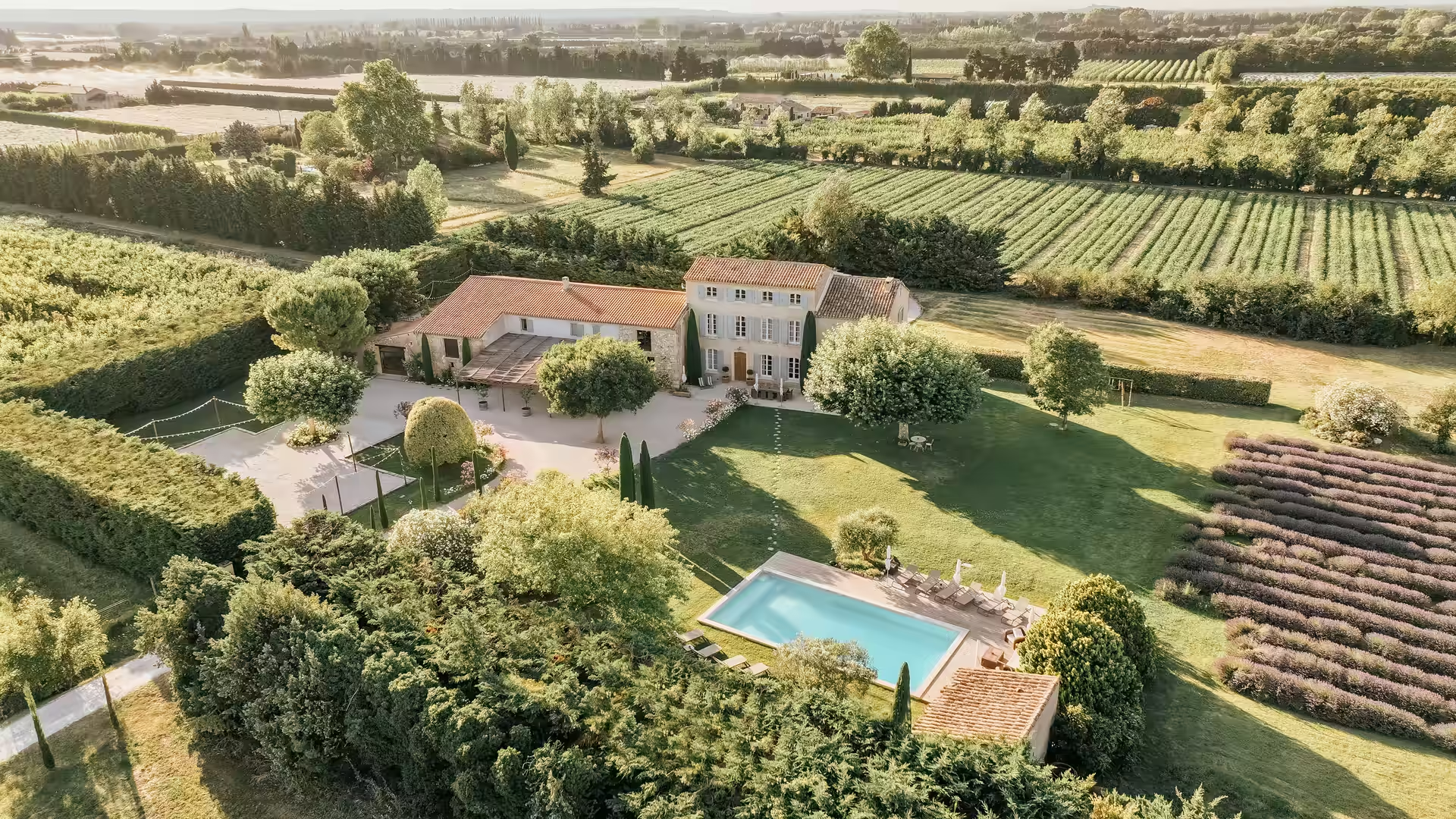
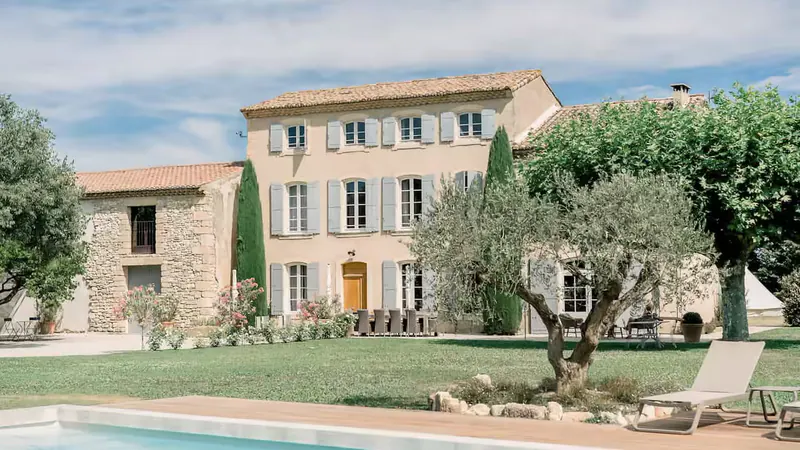
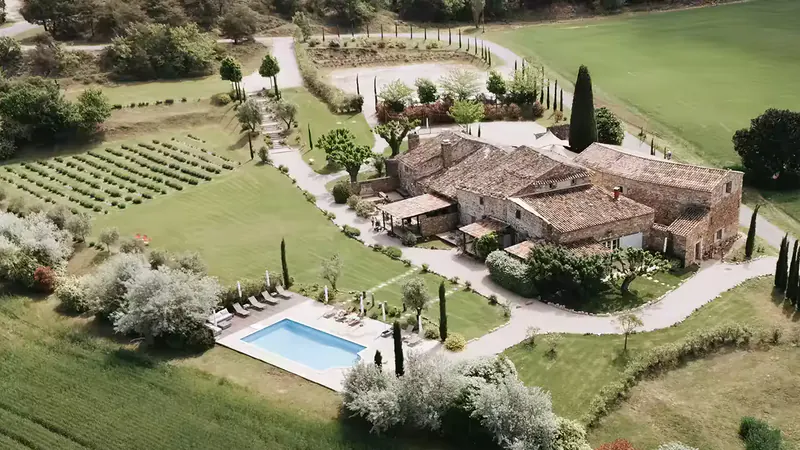
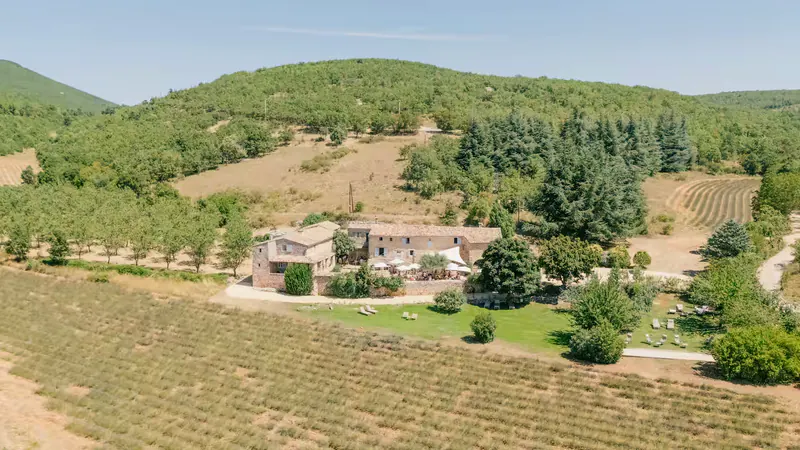
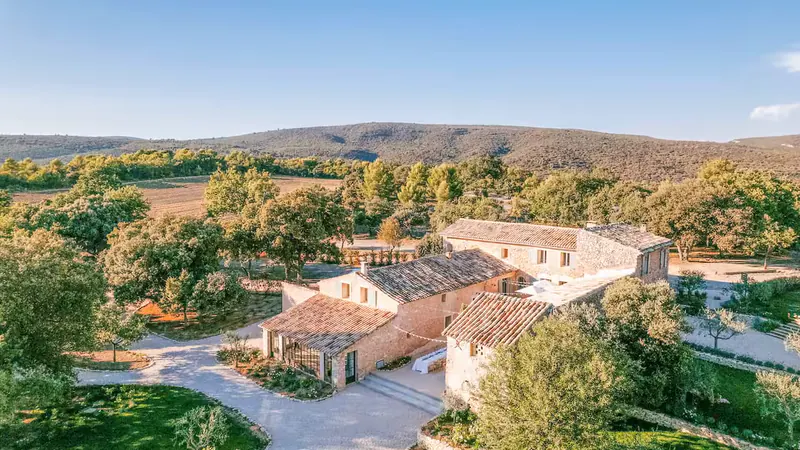
All four are seventeenth-century buildings with a life before this one, restored to continue that story rather than replace it. Beyond the walls, three things are the same everywhere because we put them there on purpose: lavender, planted wherever the land did not already carry a field of it; a petanque court, which is where guests who have never met end up in the quiet hour after lunch; and water, either a pool or a traditional Provencal basin. Each estate then has its own character, its own landscape and its own best hour of the day.
What happens if it rains?
Every estate has a covered indoor space large enough to move the dinner and the evening party under cover, which is the reason we can say yes to outdoor plans without asking you to gamble. Provence is one of the sunniest regions in France, but spring and early autumn can turn, and the mistral can blow at any time of year. The wet weather plan is agreed with you at the planning stage, not improvised on the day.
Which is the best month for a wedding in Provence?
June and September are the two months couples choose most often, and for good reason: long evenings, warm but bearable days, and the light that draws people to Provence in the first place. Lavender flowers from late June to the middle of July, which is the window to aim for if the fields matter to you. May brings green landscapes and fewer visitors, while late September and early October offer the vineyards in colour and noticeably better availability.